I Don’t Have a Smartphone…
by Ploum on 2026-09-02
…or, at least, I wish I didn’t.
"I don’t have a smartphone," is what I tell people and professionals nowadays. This allows me to cut the crap about companies insisting that I install their app or restaurants wishing that I scan a QR code to access their menu on a small screen.
"I don’t have a smartphone" is, according to my experience, the easiest explanation, the shortest way to force people to get their shit together and take the required actions to allow me to live without being glued to a small screen dependent on a huge American megacorporation.
When I buy something, from a small kitchen appliance to a car, I’m now forced to get formal confirmation by the seller that I will be able to use it without installing one, two or three different apps. I kept the count: in the last year alone, I had to argue against the installation of 18 smartphone apps. Just in my toilet, I’m supposed to have an app for the seat, an app for the flush and one for the ventilation.
It is quite fascinating because if you assume using each app for only 3 minutes per day (which basically means opening, closing and does not include doing the upgrade every other day or debugging some problems), that’s nearly 1 hour of your day! 22 full days of your year (assuming 16 waking hours per day).
What installing your app means
When you ask someone to install your app or to scan your QR code, you make the following assumptions:
1. That person owns a smartphone (which is at least a couple hundred dollars).
2. That person has the smartphone on them right now.
3. The smartphone is in working condition.
4. It has enough battery to install your app, use it then finish the day.
5. It has enough storage left for your app.
6. It has enough network coverage.
7. That person has enough data left on their data plan.
8. They have a valid and connected Google account (or, an Apple one).
9. They are comfortable with taking out the phone and dedicating some time and attention to the screen right now while not paying attention to all those notifications that the phone surely gathered since its last use.
10. They are willing to accept all the conditions of your apps, including sending you personal data, registering an account, etc.
When you think about it, this is an awful lot of assumptions.
Just regarding point 8: your Google account could be terminated right now, without reason. It happens every day. It could happen to you. Or an American president could decide your country should not have that service anymore.
If only one of those 10 assumptions is false, for whatever reason, the person will not be able to use your app. You will have to deal with it.
People always tell me I’m weird for not installing the app but, looking at this list, I find it weird that you even find people to install it in the first place!
But here we are… Those 10 assumptions have become the new commandments everyone should obey.
Why I will tell you I don’t have a smartphone
Ten assumptions that are a bit too long to explain to a vendor or a worker. So, instead of arguing about the time lost and my quest to be Google free, I took the stance of answering, "I don’t have a smartphone."
Reactions vary. Pure salesmen try to convince me that you can’t live without the app, that I need to do the mandatory "update" Why? If it’s connected, it can do its update alone. If it is offline and it works, it doesn’t need any update and updates have a higher probablility to worsen my situation than to be helpful. If it is offline and it doesn’t work well, why should I buy it in the first place?
On the other hand, real workers, those with dirty hands, often smile at me and tell me I’m right or that they wish they could not have a smartphone. On one occasion, a worker installing an appliance told me: "Oh, we will get along well!"
Which tells you something important: nobody wants the app. People install the app because they believe it is mandatory in some sort of way. Because they are afraid of missing out on something. Because they are told so by the salesman. But they just don’t want it. In fact, when pressed, most salesmen even have a hard time justifying why I should install the app.
Also, I was strongly addicted. My relationship with my phone was not healthy.
So "I don’t have a smartphone."
But it is not true.
Mudita Kompakt, my not-so-dumb-phone
My main driver is a Mudita Kompakt, a small minimalist smartphone with an e-ink device. I’ve spoken at length about it in the following piece:
The main point is that, despite being an e-ink device and being totally Google-free, the Mudita is an Android smartphone. I can install apps and, yes, I love the smartphone concept for the tools I choose. I have Signal (well, I use Molly to connect to Signal). I also have the app of my bike GPS. I don’t use it often but when I’m lost far from everything and it starts raining, I launch the Komoot app, ask for the shortest way home and upload it to my bike computer.
That’s very useful innovation!
I also use Comaps, an online calendar and the local train schedule app.
So, seriously, I do really like the smartphone idea. It’s just that I don’t have any browser or "social" app on it. And I don’t want anything else than what I have.
I wish I could say it is all I have, that I’m a true minimalist.
But it is not true.
The secondary desk phone
Somewhere on my desk, I keep an old FairPhone 3 that I repaired after it took a deep plunge into the ocean. It runs the Google-free /e/OS operating system.
But why? The reason is simple: sometimes, you are forced to use an app. Those apps may even check if your phone truly uses Google. So /e/OS has a solution to fake it (microG). The main use case is banking apps.
I highly prefer to do banking on my computer. But, having been brainwashed enough by Google, banks think I cannot be trusted to do banking on a computer I own while doing it on a small piece of glass that I keep in my pocket is "safe." Logging in on banking websites requires me to authenticate on a smartphone that checks for Google services.
It is not only banking: this secondary phone is very useful to test apps without cluttering my main phone. I’ve learned, thanks to my teenagers, that Strava will not launch without Google services. But it will also refuse to login with the fake microG. The solution is thus to launch Strava with microG enabled, to disable microG while keeping Strava running, to log into the app then to re-enable microG. A similar problem happens when using filters on Snap. Living without Google is not always painless.
At least, I can say I’m Google-free.
But this is not true.
The third, real android phone
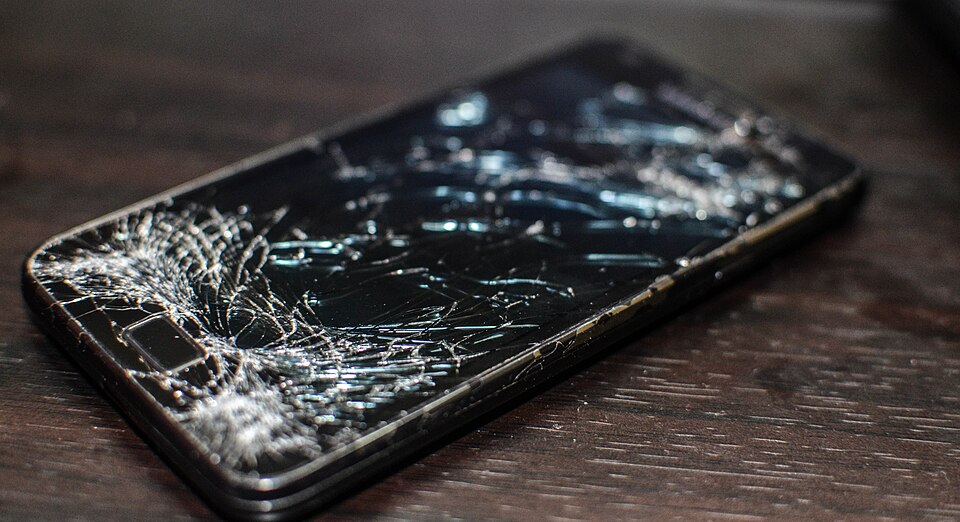
I still keep in a drawer an old OnePlus 5 I bought in 2017 with a pristine Android system. The screen is cracked, the USB connector is wobbling but it works. It is still connected to a Gmail account I created in 2001 (invitations were still required!) and that I didn’t even open for the last 10 years.
This phone is sometimes necessary. Like when a known bug in /e/OS prevented my banking app from working for several months. Anecdotally, this phone is also the thinnest, the lightest, the best screen I’ve ever seen. It also takes the best pictures (without any AI). It demonstrates that current smartphones are worst in every aspect compared with those of 10 years ago. The only exception being the CPU: that phone has a very hard time loading Anubis-protected webpages. Everything else is fine. It is hard to have this phone in your hand and not consider we are heavily scammed when we buy a modern phone.
In my country, businesses and governments are pushing hard to mandate the use of "Itsme", a proprietary authentication app developed by a commercial joint venture with the explicit intent to extract personal data and sell them commercially (yes, that was explicit in their conditions when they launched the service). I’ve always refused to register and use that service but it is becoming incredibly hard to find alternatives.
New EU regulations may also push more apps to check for the "Google Play Integrity" to ensure that they are running on a true Google owned Android.
I’m fighting hard but I foresee a moment when we will all be officially forced to have a Google account. If you have children, you are also forced to have a Meta account as everything school related now happens through Whatsapp.
So I’m living Meta-free because my wife volunteered to handle the Whatsapp groups. I’m living Google free because, deep in a drawer, there’s still a solution for the day when I could not work it out without Google.
Who could have predicted
I’m European. The whole continent is assumed to have a Google and a Meta account. To always have in their pocket a Google or Apple certified and remotely controlled piece of hardware. It is even sometimes assumed to have a Microsoft account (like that time when the platform to be reimbursed from a cancelled ticket assumed a Sharepoint login).
This is frightening. We are putting all our eggs in the same basket. And our milk, our water, our house, our furniture and our loved ones. In an electrical-auto-closing basket remotely controlled by a foreign entity that openly spies on us and wants to extract as much money as they can. For some reason, it is considered weird not to like the basket.
At least, some are trying to build alternatives
- Why there’s no European Google? (ploum.net)
- The Privacy Respecting European Phone (jolla.com)
- Delta Chat, decentralized secure messenger (delta.chat)
At the same time, European politicians are focusing on "not seeing" this elephant in the room while dedicating huge money and effort to promote "European AI" or "European Blockchain." Seriously. They are so blind to easy, innovative and existing solutions (Peertube, Mastodon, European mail hosting,…) that I’m starting to suspect that being dumb doesn’t explain it all, that they are truly corrupted.
In the meantime, I do my small part. I defend my small hill. I’m an Offpunk.
And when requested anything about an online service or a smartphone, I answer:
I don’t have a smartphone!

About the author
I’m Ploum, a writer and an engineer. I like to explore how technology impacts society. You can subscribe by email or by rss. I value privacy and never share your adress.
I write science-fiction novels in French. For Bikepunk, my new post-apocalyptic-cyclist book, my publisher is looking for contacts in other countries to distribute it in languages other than French. If you can help, contact me!